
Umoja Outreach Foundation

Screen Addiction and How to Break it by Encouraging Sport

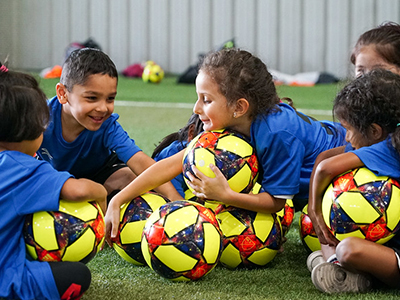
It seems that as the years go by, tablets and phones end up in the hands of younger and younger children, their eyes glued to the tiny moving characters on their screens. Video games, tablets, computers and iPhones have come to occupy every waking moment of children’s time and energy, leaving them addicted to the adrenaline and serotonin boosts they feel whenwinning a game or watching a video. Especially with the pandemic leaving children dependent on computers to go to school, the compounding effect of social isolation has increased the likelihood of children developing Screen Dependency Disorder. According to Family Life and Child Development specialist Claudette Avelino-Tandoc, the increase of screen time can lead to many behavioural and physical effects such as anxiety, feelings of loneliness, insomnia, headaches, weight gain and back pain. In the long term, these effects can manifest into more severe consequences such as brain damage. Many studies have shown that children with severe screen dependency disorder have lost brain tissue in the frontal lobe, striatum and insula. These parts of the brain are important in planning and organization, instructing us to suppress socially unacceptable impulses, and in the capacity to develop compassion and empathy. Of course devices and gadgets themselves are not bad, however it is the way in which children (and adults) utilize these tools can evolve into dangerous and destructive devices that leave long lasting effects on the brain. Again, especially now after two years of social isolation and excessive screen time, symptoms of screen dependency may emerge in children and adults. Some of these symptoms include:1. Loss of interest in other activities 2. Using screen time to boost mood3. Physical symptoms like headaches, blurry eyes, foggy brain, obesity and sleep issues4. Behavioural symptoms like tantrums, difficulty solving problems, and stunted emotional skills Screen dependency is essentially an epidemic, one that will continue to manifest as technology continues to develop and advance. So how does one mitigate the impact of such an addiction in our children and in ourselves? Reducing screen time and encouraging ‘screen-free’ time where physical activity is prioritized can mitigate the physical and behavioral impacts of screen dependency. A new study conducted at the University of Helsinki reports that getting about 1 hour of physical activity a day at age 11 can reverse the effects of obesity due to screen addiction and heavy screen usage by the time the child is 14. Of the 4600 children involved in the study, researchers concluded a link between digital usage, weight gain and physical activity. Although more research is required to understand how much digital usage leads to obesity in children, this study, as well as many others, show that any activity is better than no activity at all. It has been a long 2 years for us all, especially on children and kids who had to abandon their routines and social life in exchange for online school and zoom classes. It’s now becoming more safe for kids to return to sport and their previous activities. Let UMOJA help with getting your kids back on track with their activities and passion for sport. Join us this year in Richmond, Virginia July 1st to 3rd and let’s get kids off their tablets on back on the field! Enjoy screen-free family fun at Kings Dominion where there is something fun for everyone. We hope to see you and your families out in Richmond very soon!!

Relationship Between Sport and Religion

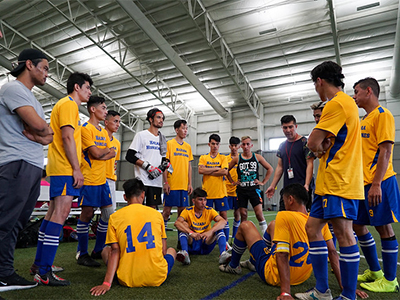
The relationship between sport and religion has dated back to the earliest civilizations and has continued to evolve as society has developed into the modern civilization that we now live in. The ways in which sport structures beliefs, values and behaviors is often compared to the ways in which religion teaches important values and lessons. In fact, the message that both religion and sport teach us are similar, using symbols to communicate important values and lessons.There is much historical evidence that points to the strong relationship between sport and religion. This relationship is best understood as multi-dimensional, meaning it can be thought of in several different aspects. One way it can be understood is the usage of sport as a religious ritual. Before the Spanish conquistadores in the 16th century, the Aztec and Mayan civilizations often used sport as a religious ritual to honor the gods. The Mayans practiced ball games within the temple complex and provided a conquering ruler with the means to validate his reign in the eyes of the gods. Later, the Ancient Greeks would hold four great games – the Olympian, the Pythian, the Isthmian and the Nemean – all associated with the worship of gods and held in sites of religious rituals. As athletes excelled in sport, they were sometimes even accorded the status of ‘god’. In modern times, athletes are no longer seen as gods per se, but are still highly revered as the epitome of discipline, determination, and dedication. Even when sport is not a part of religious ritual, it can be metaphorically linked to religion as a symbol of strife and setting elusive goals for life. In Islam, Prophet Muhammed (pbuh) often encouraged Muslims to practice sport such as equestrian, swimming and wrestling to maintain our body health, strengthen the body for when needed and engage in activities that bring enjoyment and relaxation. Such activities ultimately bring balance which leads to a sense of fulfillment in one’s life. This is why at Umoja we promote the message of life long participation. We welcome all ages from toddlers to adults to engage with the community and participate in keeping our bodies healthy, able and balanced. Join us this July 1st to 3rd in Richmond, Virginia to meet your Muslim brothers and sisters from all over the world and make life long memories. If you do not have a team that doesn’t mean you cannot play! Let us match you with a team and experience the tournament of the year! We are eager to see you in Richmond!

Sisters in Sports: Women’s Participation

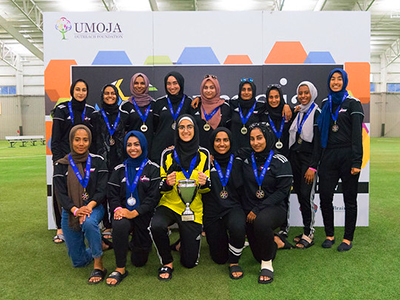
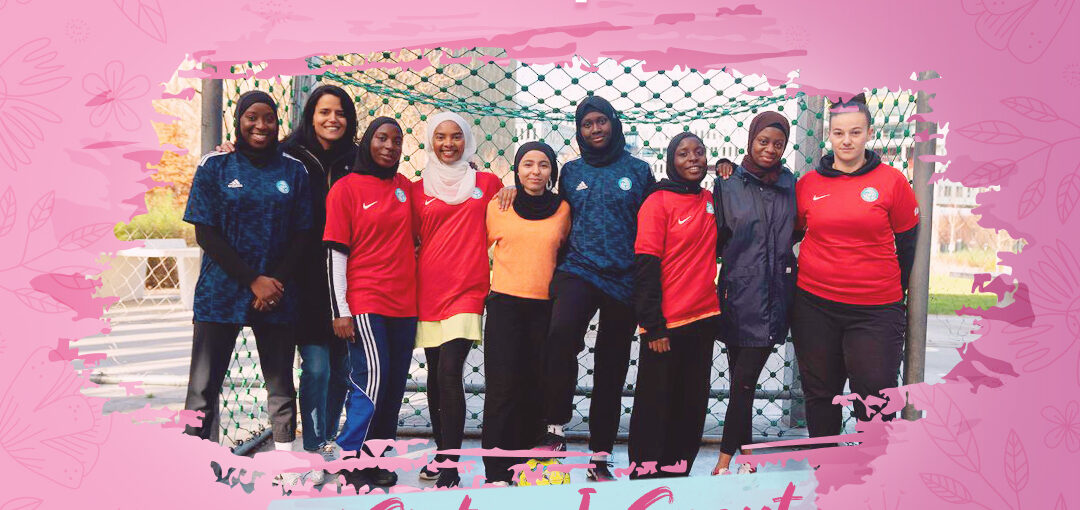
In 2020, more than 10,000 Canadians were surveyed for The Rally Report, a report supported by Canadian Tire Jumpstart Charities exploring the current trends in sport participation with a specific focus on girls and women. The study showed that as girls age, the rate of participation dips: 57% of girls aged 6-12 are active weekly but this number drops to 38% by 16-18. While boys/men participation also decreases with age, the rate at which participation drops is not comparable. 1 in 3 girls drop out of sport during adolescence compared to 1 in 10 boys. There is a clear need for not only increasing female participation in sport, but also for retaining the number of girls who play well into their adolescence and adulthood. The results of these types of studies are meaningful when understood in tandem to the social, physical and emotional impacts of sport participation. Sport participation has shown to make a difference in the ways women perceive themselves. Women who participated in sport reported feeling more physically healthy, confident, successful, collaborative and inspirational to others. Furthermore, sport is a space where life lessons are learned, preparing an athlete for the hurdles and struggles of the world. In fact, a study conducted by Ernst & Young in 2018 found that 94% of women who hold C-suite positions are former athletes. Success in the business world is achievable through determination and perseverance in the face of setbacks – very similar to the level of intensity and perseverance learned through physical and emotional setbacks in sport. Whether playing at the highest level of competitive sport or participating in recreational sport, women learn to push themselves beyond their comfort zone, which is where most of our self-growth tends to happen. Therefore, at Umoja we are determined to provide the opportunity for women and girls to participate in sport to reap the social, physical and emotional benefits of participating in organized sport. There are 4 categories this year for girls and women: Girl’s 10 and under, Girls 14 and under, Women’s Open and Women’s Above 35. This year, the women’s and girl’s category will be changed to 5 a side instead of 8 a side. In 5 a side, each team will require 8 to 9 players to register to be considered a full team. The tournament is quickly approaching, and we do not want you to miss out on the opportunity to experience the tournament of the year! Go out and grab your friends or family and register your women’s or girls’ team today! You do not need to have a full team in order to participate at Umoja, you can register as a Free Agent to be placed in a team according to your gender and age. We are looking forward to hosting a successful, competitive and fun tournament this year July 1st -3rd in Richmond, Virginia! We hope to see you all there!

Reason’s That Richmond Should Be On Your Summer 2022 Bucket List

With the price of gas making travel more expensive, the idea of leaving home for an event can seem daunting. Fortunately, Richmond is a vibrant and compelling city with enough fun activities to easily turn your tournament weekend into a vacation for the whole family.  Between a plethora of cool museums, stunning natural habitats and botanical gardens, and all kinds of high-energy facilities to occupy little ones, there is sure to be something for everyone in the capital city of Virginia. Summer time is the perfect opportunity to get out of the house and enjoy the outdoors, thankfully Richmond makes it easy to do so, offering a 54 acre island named The Belle Isle that is positioned on the James River and is completely free! If you’re interested in something a little more manicured, look no further than the Lewis Ginter Botanical Gardens, complete with 50-acres of landscape, a tea house, a library cafe, a children’s garden, and a fairy forest. While there’s no shortage of ways to enjoy the July sunshine, Richmond makes staying in doors equally appealing. With 6 major museums ranging from history, to literature, to science, everyone is sure to find their interest piqued. Poetry fanatics are sure to be engulfed in the Edgar Allen Poe Museum, boasting the largest collection of the late poet’s memorabilia from his time as a Richmond resident. For the history buffs out there, the Virginia Museum of History & Culture will undoubtedly provide satiation. Of course this museum list would be incomplete without mentioning the Science Museum of Virginia, which not only includes three floors of exhibits and interactive activities, but also a planetarium and a children’s section. Certainly, Richmond is an exciting and beautiful place to bring yourself and your loved ones as a summer retreat. There is no shortage of things to do and places to explore, with attractions spanning all age groups and interests. We hope you will join us for an energetic weekend of good spirited fun and teamwork, and check out all that the river city has to offer while there!